


Arts and Health Evaluation Toolkit
Lead Researchers
K Agres
Lead Institution
National University of Singapore
Status
Complete
Type
Evaluation Toolkit
Affiliate Lab

Centre for Music and Health, Yong Siew Toh Conservatory of Music
THRivE Toolkit

AHET Toolkit

Downloadable Toolkit
Arts & Health Evaluation Toolkit (AHET)
Introduction
The arts have demonstrated significant potential in improving health and well-being, with supportive findings across various contexts and applications. It remains crucial, however, to strengthen the evidence base to support the field’s progress. Formal evaluation plays a critical role in this process by ensuring the rigorous assessment of arts-based interventions. In this project, researchers will develop an Arts and Health Evaluation Toolkit to promote more rigorous evaluation of arts and health interventions, to enable more systematic assessment of interventions, allow meaningful comparisons across studies, and drive progress in the field.
Scope
The Arts and Health Evaluation Toolkit recommends a set of tools (e.g., validated scales) to evaluate the outcomes and impact of arts interventions on health, well-being, and social connection. The toolkit provides conceptual information about different types of evaluation, an overview of relevant research/experimental designs for arts-based programs, and descriptions of qualitative and quantitative measures for a variety of relevant outcome measures. Modules within the toolkit focus on sets of relevant outcome measures to the field of Arts and Health, such as Mental Health (including Depression and Anxiety), Quality of Life (including Quality of Life, Life Satisfaction, and Well-being), and Emotion and Mood (including Emotion, Mood, and Happiness). Tools to measure physiological responses are also briefly be discussed.
In addition to recommending tools for evaluating the impact of arts interventions, the resource offers practical guidance, use cases, and an assessment of the strengths and limitations of each tool (such as cost, time to administer, and recall period). The overarching goal of the toolkit is to promote consistent and rigorous evaluation practices within the field of Arts and Health.
These reviews informed the Arts & Health Evaluation Toolkit digital resource, which was released in Dec 2025.
Deliverables
A series of literature reviews were conducted for relevant outcome measures (e.g., Mental Health, Quality of Life, Mood, etc) to identify canonical measurement tools in the medical and public health literature. A further investigation of the literature examined the frequency of use of these tools across various arts domains.
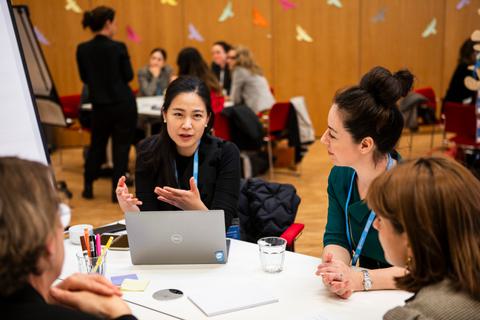
An interactive online workshop was held in October 2024 to share preliminary findings with the local arts and scientific communities, and to gather feedback and suggestions for refining and tailoring the toolkit for the community’s needs. A final launch event at the Yong Siew Toh Conservatory of Music was held in July 2025 to disseminate the toolkit and provide guidance on its usage.
With the exponential growth of the arts & health field, and a particular interest in culture as a tool for health, wellbeing, and social connection, the Arts & Health Evaluation Toolkit has been expanded into a larger resource called the THRivE Toolkit (Tools for Health Research and Evaluation in Arts and Heritage), to integrate cultural heritage and include additional chapters such as data analysis and dissemination. The THRivE toolkit was launched in December 2025 at Healing Arts Singapore - Asia’s first national-level arts and health convening.
Project Team
Led by A/Prof Dr. Kathleen Agres (CMH, YSTCM, NUS), Co-Investigator Dr. Jean Liu, and Collaborators Dr. Nisha Sajnani and Dr. Natalie Pang, the research team consists of members from the Centre for Music and Health (CMH) at the Yong Siew Toh Conservatory of Music, National University of Singapore.
Funding and Support
Support for this project was provided by the National Arts Council (Singapore), Tote Board (Singapore), and the National Heritage Board (Singapore).
Categories
Research Team

Kat Agres, PhD
Lead Researcher, National University of Singapore

Nisha Sajnani, PhD
Collaborator, NYU Steinhardt

Jean Liu, PhD
Researcher, Centre for Evidence and Implementation

Natalie Pang, PhD
Researcher, National University of Singapore